
The Magic Circle: Why Joseph Pilates Loved It, And How We Use It Today
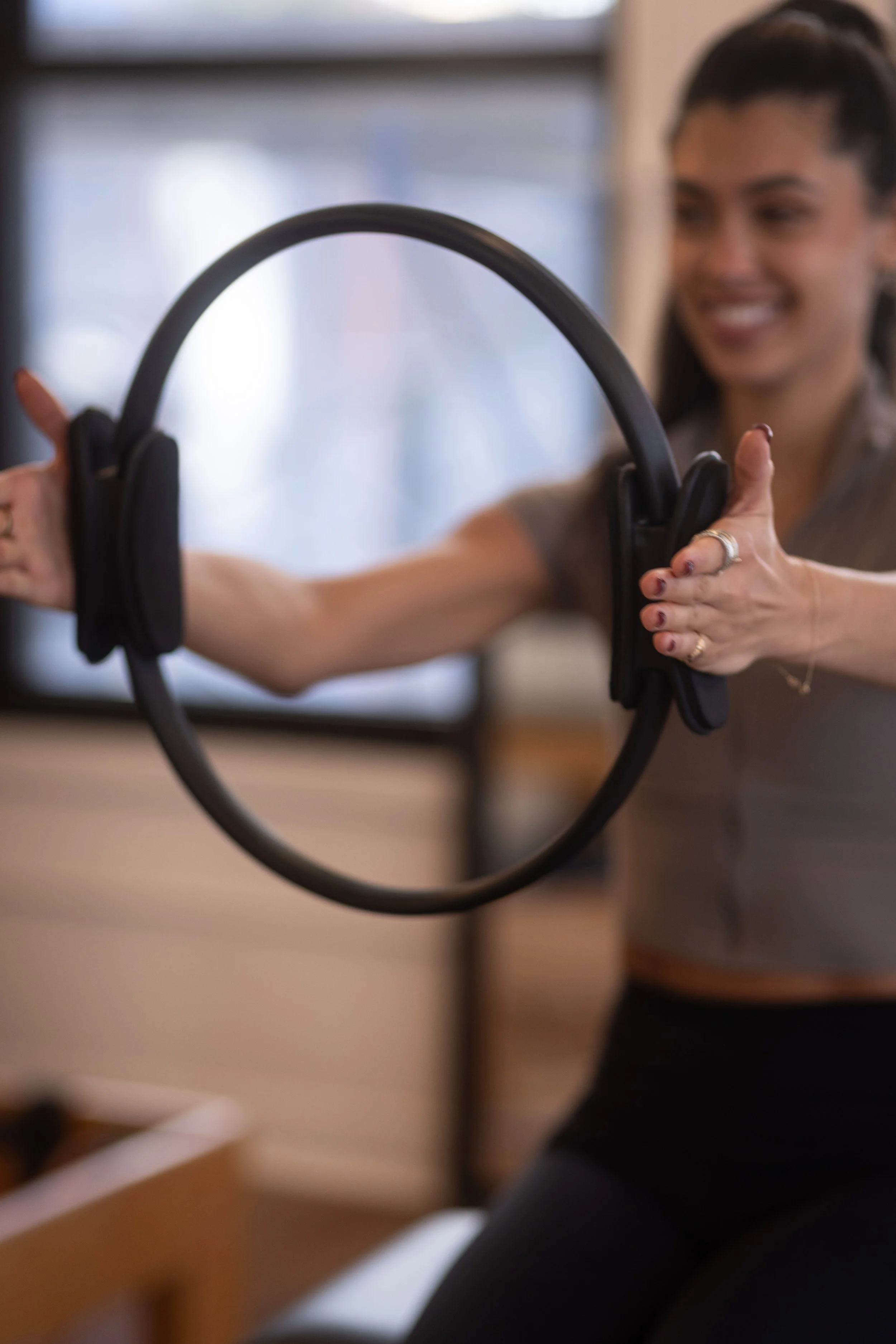
Walk into a Pilates studio and you’ll see a variety of equipment that can feel intriguing or even a little intimidating. Among the reformers, towers and barrels, there’s one deceptively simple-looking prop that sparks curiosity: the Magic Circle. Lightweight, flexible, and unassuming, it doesn’t look like much at first glance. Yet Joseph Pilates himself was deeply fond of this piece of equipment. At The Pilates Room NYC, we love incorporating the Magic Circle into routines because it captures the essence of the Pilates philosophy: intelligent resistance, focused control and a deep conversation between the mind and the body.
Joseph Pilates believed that the body thrives on feedback. He was less interested in brute strength and more focused on how muscles communicate and coordinate. The Magic Circle was designed to provide that feedback in a clear, immediate way. Traditionally made from metal with padded handles, it offered resistance that was subtle but demanding. When you press into the ring, it presses back just enough. There’s no momentum to hide behind, no heavy load to overpower. Every movement requires intention, which is exactly what Joseph Pilates valued most.
The first time a client uses the Magic Circle, they’re often surprised by how challenging it feels. The Circle has a way of waking up those deep stabilizing muscles that don’t always get attention in more dynamic workouts. The ring can shine a light on imbalances, too. One side may feel easier to press than the other, or tension may creep into the shoulders or even the jaw. This isn’t a flaw in the exercise; it’s the exercise doing its job. The Magic Circle teaches awareness before it teaches strength.
One of the reasons Joseph Pilates loved the ring was its versatility. It can be used seated, standing or lying down, and it integrates seamlessly into mat and equipment work. At our studio, we often introduce the Magic Circle early in a client’s Pilates journey because it helps clarify where movement should be coming from. When placed between the inner thighs, for example, the ring encourages activation of the adductors while also supporting pelvic stability. When held between the hands, it brings attention to the connection between the arms, shoulders and upper back. These connections are foundational to the method and essential for safe, efficient movement.
The Magic Circle also plays an important role in teaching opposition, which is a key Pilates concept. Rather than simply squeezing inward, clients learn to balance effort by lengthening through the spine and expanding outward while maintaining gentle pressure on the ring. This creates a feeling of lift and space, even during challenging exercises. Joseph Pilates believed that true strength comes from balanced development, and the ring makes that idea tangible. It’s not about crushing the circle; it’s about engaging just enough to support the whole body.
In modern Pilates, we use the Magic Circle as both a challenge and a support. For some exercises, it adds intensity by increasing resistance or demanding greater control. For others, it provides assistance by helping clients find alignment or maintain stability. Placed behind the back, the ring can encourage upright posture and awareness of the spine. Used under the hands or feet, it can offer feedback that helps clients feel grounded and organized. Placed between the chest and the floor, the Magic Circle can offer support as people learn proper pushup form. This adaptability is part of what makes the Magic Circle a timeless tool.
From an educational standpoint, the Circle is incredibly effective because it makes abstract concepts physical. Ideas like core engagement, midline connection and scapular stability become easier to understand when the body can feel them directly. Many clients tell us that exercises suddenly “click” when the Magic Circle is introduced. That moment of clarity is powerful and motivating, especially for beginners who are still learning how to interpret cues and sensations.
There’s also something uniquely humbling about the Magic Circle. Because it looks simple, people underestimate it. Then they try it and realize how much focus and coordination it requires. This humility aligns perfectly with Joseph Pilates’ philosophy. He believed that mastery comes from repetition, attention and respect for the fundamentals. The ring brings practitioners back to those basics, no matter how experienced they are.
The Magic Circle offers a refreshing counterpoint to the traditional frenetic, beastmode workout. It asks clients to slow down, tune in, and work smarter rather than harder. Sessions that include the Circle tend to feel deeply satisfying, not because they exhaust the body, but because they engage it fully. Clients leave feeling organized, energized, and more aware of how they move through the world.
Today’s Magic Circles may be made from lighter materials and come in different resistances, but their purpose remains the same. They connect us directly to the roots of the Pilates method. At our studio, we see the Magic Circle not as an accessory, but as a teacher. It reminds us that effective movement doesn’t require complexity. Joseph Pilates once said that physical fitness is the first requisite of happiness. The Magic Circle embodies that idea in its purest form. Simple, thoughtful, and demanding in all the right ways, it continues to help clients build strength, awareness and confidence—one intentional squeeze at a time.
Check out our 10-minute Magic Circle Pilates flow. This short mat session is designed to energize your core, add gentle resistance and help you feel more supported and connected to your body.