
Pilates: A Supportive Way to Address Back Pain
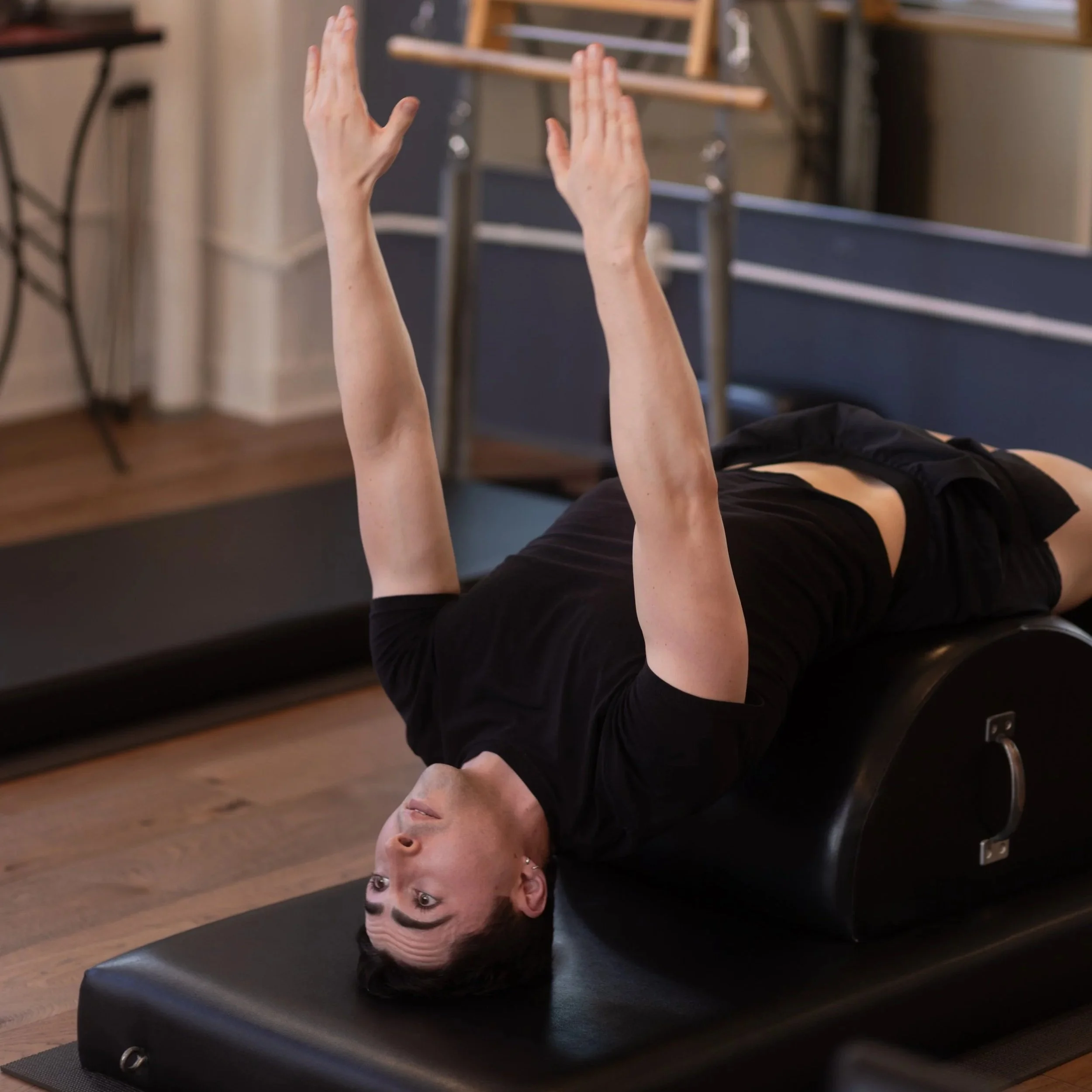
Chronic back pain is a common affliction that has the frustrating power to zap joy from any experience. It can make simple tasks like getting out of bed, lifting a child or sitting through a meeting feel like a hostage negotiation with your own body. Pilates offers a thoughtful, movement-based approach to managing back pain and other related spinal issues—from age-related discomfort to more complex conditions such as scoliosis and degenerative disc problems. Pilates focuses on rebalancing the body by building centralized strength, improving alignment and promoting mindful breathing, all of which can help mitigate back pain.
A central tenant of Pilates is the idea that movement should start from a strong, stable core. When the stabilizing muscles around the spine—the deep abdominals, multifidus, pelvic floor and the diaphragm—work efficiently, the load on the vertebrae and discs is reduced. This is particularly important for someone with chronic lower back pain. Pilates encourages precise engagement of supportive muscles so that movement becomes less painful and more resilient. This offers a nice contrast from exercise that requires pushing through pain with repetitive, high-impact movement. Over time, Pilates can reduce compensatory patterns that often perpetuate pain, such as bracing through the superficial muscles or over-relying on other muscles like the hips and hamstrings.
In the case of disc-related issues, such as herniated or bulging discs, Pilates can be adapted to both respect healing tissues and restore function. A common misconception is that movement will worsen disc problems. This belief is dangerous, because it can keep people needlessly sedentary. In reality, guided, controlled movement promotes circulation and nutrient exchange around the discs and can help re-establish proper movement patterns that prevent recurrent strain. The goal is to create space in the spine through improved posture and mobility of the surrounding joints while using the deep stabilizers to control motion. When performed under knowledgeable instruction, Pilates offers a safe way to progress from gentle, pain-free movement into more dynamic control.
Scoliosis presents unique challenges because it involves a lateral curvature and often rotation of the spine. This asymmetry changes how muscles are used and how forces travel through the body. Pilates is naturally suited to addressing these asymmetries because it is inherently focused on balanced, three-dimensional movement and individualization. A Pilates-informed approach assesses the spinal curve and compensatory patterns, then uses targeted strengthening and lengthening to support improved alignment and function. This does not imply that Pilates “fixes” the structural curve, but it does help the body move with less pain and enhance muscular symmetry. For many people with scoliosis, gaining better control over the torso and pelvis leads to less discomfort and greater ease in daily activities.
Beyond structural considerations, Pilates places great emphasis on breath and its relationship to the spine. Deep, coordinated breathing supports the diaphragm’s role in spinal stability, while also calming the nervous system (for more on this, check out our blog Pilates and the Nervous System). Pain, especially persistent pain, often results in protective tension and fearful movement habits. People who experience chronic pain commonly preemptively brace or guard themselves, which involves tightening muscles around a painful area to try to protect it. Initially this can feel helpful, but when sustained it often creates new problems. Pilates restores a sense of safe, controlled motion, which can reduce that protective guarding and restore confidence in movement. When the nervous system experiences predictable, non-threatening motion, pain signals can diminish and mobility can improve.
A Pilates session for someone with back issues is relational: it begins with listening and observation. An instructor will assess movement patterns, posture, breathing and areas of tension or weakness. Work might start on the reformer or mat with gentle exercises that emphasize neutral spine, pelvic stability and scapular mechanics, progressing only as control and symptoms allow. Exercises that isolate the deep stabilizers are woven into sequences, so that improvements translate into everyday tasks like bending and lifting.
Modifications and props may be part of the regular toolkit for clients with chronic back pain. Blocks, straps, springs and specific equipment settings allow the same movement principles to be practiced at different intensities. For a person recovering from a disc flare-up, for example, shortening lever arms and decreasing load on the spine can make reintroduction of movement safe and effective. For someone with scoliosis, selective use of resistance can help address side-specific weaknesses. The adaptability of Pilates is one of its strengths: the practice meets each body where it is.
Of course, there are limits and cautions worth noting. Pilates is not a substitute for a medical diagnosis or surgical care. People with acute neurological signs—significant weakness, progressive numbness or changes in bowel or bladder function—require immediate medical attention. Likewise, certain advanced movements or heavy loading may be contraindicated depending on the particular pathology and stage of healing. Close communication between your healthcare provider, physical therapist and Pilates instructor creates the safest, most effective pathway forward.
Real-world outcomes often start with small changes. For example, your sleep may improve if rolling over in bed no longer triggers intense pain. You may experience greater confidence and more flexibility when reaching overhead. You may notice that you’re walking with a less guarded posture. Over months of consistent practice these small wins compound into meaningful improvements in quality of life. Many people report not just reduced pain but a renewed ability to participate in activities they love, like gardening, yoga or running, without frequent pauses to regroup.
If you’re exploring Pilates for back pain, start conservatively and give the body time to adapt. The most effective programs honor individual variability, move slowly and focus on sustainable, pain-free function rather than quick fixes. It’s worth emphasizing that Pilates is not one-size-fits-all. The same exercise can feel completely different depending on the body that’s doing it. This is why guidance matters. The goal is not to perform exercises perfectly, but to perform the right exercises for your body, in the right way.
Pilates offers a pathway to better spinal health by rebuilding the foundations of movement: alignment, breath and core support. Whether coping with degenerative disc changes, the asymmetry of scoliosis or generalized chronic back pain, the practice helps restore balance and resilience. It encourages the body to move with intelligence and care, creating a supportive environment where recovery and long-term management become possible. If back issues are part of your story, consider Pilates as a measured, movement-based component of your plan for lasting relief and stronger, more capable movement.
At The Pilates Room NYC, we believe that a Pilates practice can help support functional fitness and relieve pain. However, if you are experiencing chronic pain, recovering from an injury or surgery, have a diagnosed medical condition or have concerns about your health, you should consult your physician or other qualified healthcare provider before beginning or modifying a Pilates practice.