
Tracking Progress in Pilates: How to Measure Growth in Flexibility, Strength, Posture, Breath Control and Balance
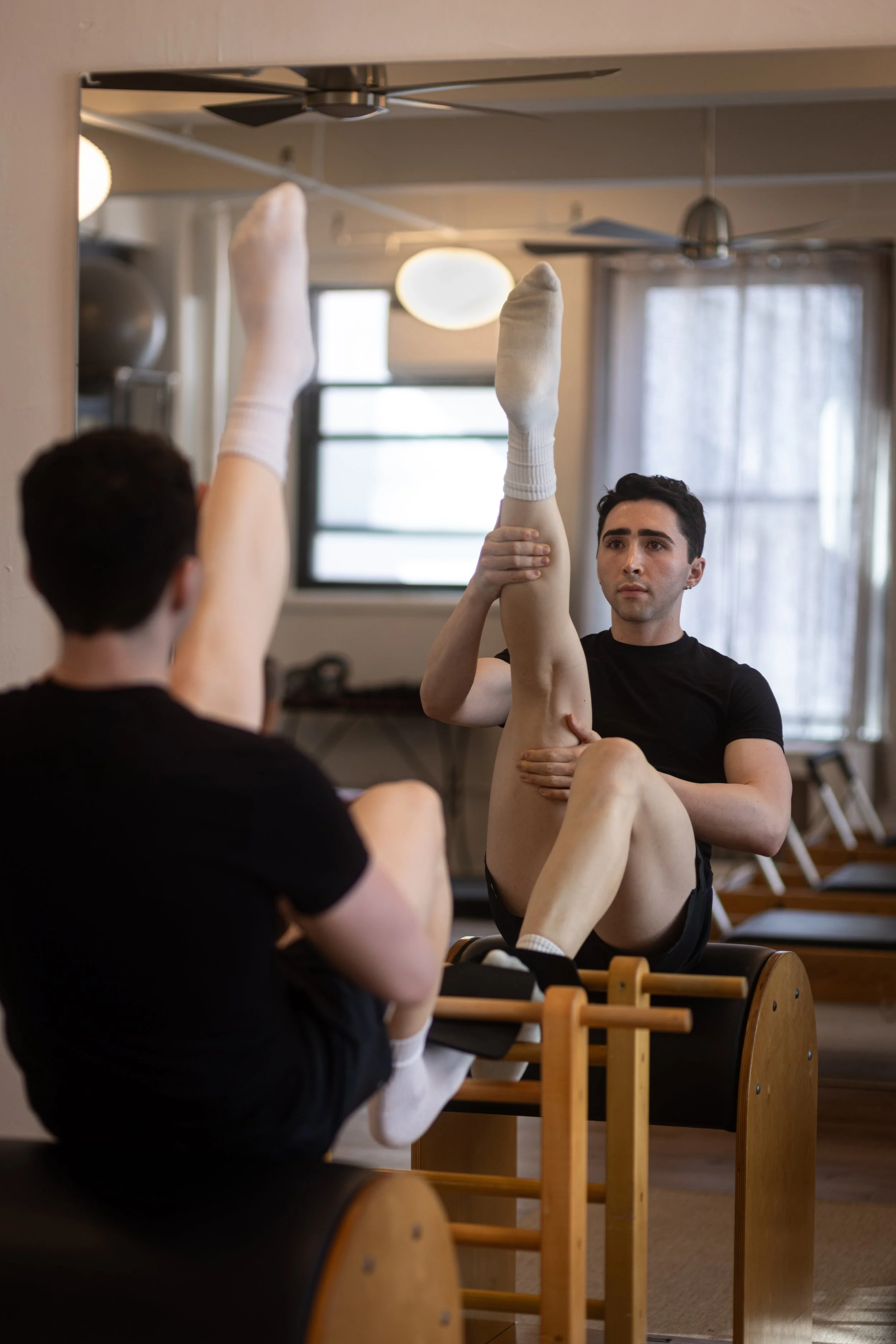
Because Pilates movements can be subtle and the benefits often develop gradually, many practitioners wonder how to know whether they’re truly improving. The good news is that progress in Pilates is absolutely measurable, even if it doesn’t always appear in the dramatic before-and-after snapshots we’re used to seeing in the fitness world. Tracking your progress can deepen your motivation, help refine your technique and provide powerful insight into how your body changes over weeks and months.
One of the most common areas where Pilates practitioners notice improvement is flexibility. Unlike passive stretching, Pilates develops what many instructors call functional flexibility—the ability to move with control through your full range of motion. Tracking flexibility can begin simply by observing how your body feels during warm-ups or foundational movements such as the spine stretch, roll-down or hamstring stretches. Keeping a journal to note how far you can comfortably hinge forward, how easily you rotate your torso or whether certain movements feel less restrictive is an excellent way to document change. Some practitioners capture photos or short videos of their practice every few weeks to track differences in range of motion that may otherwise go unnoticed. Over time, you might realize you can reach farther toward your toes, twist more freely through your spine or maintain positions that once felt strained. This kind of progress is subtle yet undeniably powerful because it reflects deeper mobility and muscular balance.
Strength is another key marker of growth in Pilates, though it may not show up exactly the way it would through traditional weight training. Pilates strength is deeply rooted in stability and control. One of the best ways to track this type of strength is by paying attention to how your body responds during core-focused exercises like the hundred, teaser and plank variations. At first, you may need frequent rest breaks or modifications, but over time, you’ll likely notice you can hold positions longer or transition between movements with greater ease. Writing down how many repetitions you completed, how long you held a posture or how challenged you felt on a scale from 1 to 10 can create a clear record of improvement. Strength progress also becomes visible in small victories, like being able to lift higher off the mat, maintain pelvic stability when extending your legs or perform movements with less trembling and more intention. As your deep stabilizing muscles grow stronger, you may feel more supported during everyday movements, showing that Pilates strength carries far beyond the studio.
Pilates has a remarkable ability to improve posture, and tracking those changes can be both motivating and eye-opening. Because posture shifts gradually, many people don’t recognize how much it has changed until they compare photos from different points in time. Standing side-profile photos—taken every four to six weeks—can reveal differences in spinal alignment, shoulder positioning and head carriage. You may start to see your shoulders sitting farther back, your ribcage aligned more naturally over your pelvis or your neck lengthened rather than compressed forward. But progress in posture isn’t just visual; it’s also something you’ll feel. Report how easy it is to stand tall throughout the day, how much less tension you carry in your upper back or hip flexors and whether you’re more aware of your alignment when sitting, walking or lifting. These subtle signs reflect the way Pilates rewires your neuromuscular system to support efficient posture, not just for workouts but as a new daily baseline.
Breath control is another often-overlooked category where practitioners can observe significant progress. Pilates breathing helps initiate movement from the core and improve coordination. In the beginning, coordinating breath with precise movement can feel confusing or forced. Over time, however, you may notice your breath naturally deepens, your ribcage expands more fully and your exhalations become more powerful, especially when engaging your abdominal muscles. Documenting how breath feels during challenging sequences, or noting whether you can maintain steady breathing during complex patterns, helps highlight improvements in mind-body connection. Better breath control often translates into enhanced focus and efficiency during your practice, allowing movements to feel more fluid and less strenuous.
Balance is another metric that offers clear indicators of growth. Pilates challenges both static and dynamic balance through single-leg work, rotational movements and exercises that require coordinated stabilization of the spine and pelvis. In the early stages, even simple balance exercises may feel wobbly or unstable. However, by regularly revisiting these movements, you’ll likely notice that you can hold positions longer and transition between exercises with less hesitation. Tracking balance can be as straightforward as timing how long you can maintain stability during a single-leg hold or observing how easily you can perform movements like side kicks or standing leg lifts without losing alignment. Improvements in balance often reflect increased core strength, neuromuscular efficiency and a stronger connection between the mind and body.
Another powerful way to track progress is through your overall sense of ease and confidence during practice. In the beginning, Pilates can feel mentally demanding: cues come quickly, coordination takes effort, and sequencing can be challenging. Over time, you may find that you not only understand the movements more intuitively but also execute them with greater precision. The mental clarity and familiarity you develop form an important part of your progress. Taking notes after class about which exercises felt more accessible, which cues finally “clicked” or which transitions became smoother helps create a narrative of growth that isn’t solely physical.
It’s also useful to acknowledge progress in daily life, not just in the studio. Many practitioners report being able to sit longer without discomfort, climb stairs more easily, carry groceries with better posture or participate in other physical activities with a newfound sense of control. These functional improvements are often the most meaningful indicators of how Pilates enhances your entire quality of movement. Tracking moments in day-to-day life where you feel stronger, more flexible or more supported builds a fuller picture of your progress and reinforces the long-term value of your practice.
Consistency in tracking is key. Whether you prefer journaling, taking photos, recording videos or simply noting mental observations, the goal is to create a habit that keeps you aware of the small changes that accumulate into meaningful transformation. Reviewing your notes or images every few weeks can be incredibly encouraging, especially on days when progress feels slow.
Ultimately, tracking your progress in Pilates is about cultivating awareness—of your body and mind, and the way they work together. Progress may not always be dramatic, but it is always happening. Every movement that feels a little smoother, every alignment cue that resonates more deeply, every moment of stability where there was once wobble is evidence that your practice is evolving. By taking time to notice these changes, you honor the continuous journey of Pilates and celebrate the quiet power of transformation.