
Inside the Studio: 10 Things Pilates Teachers Want You to Understand
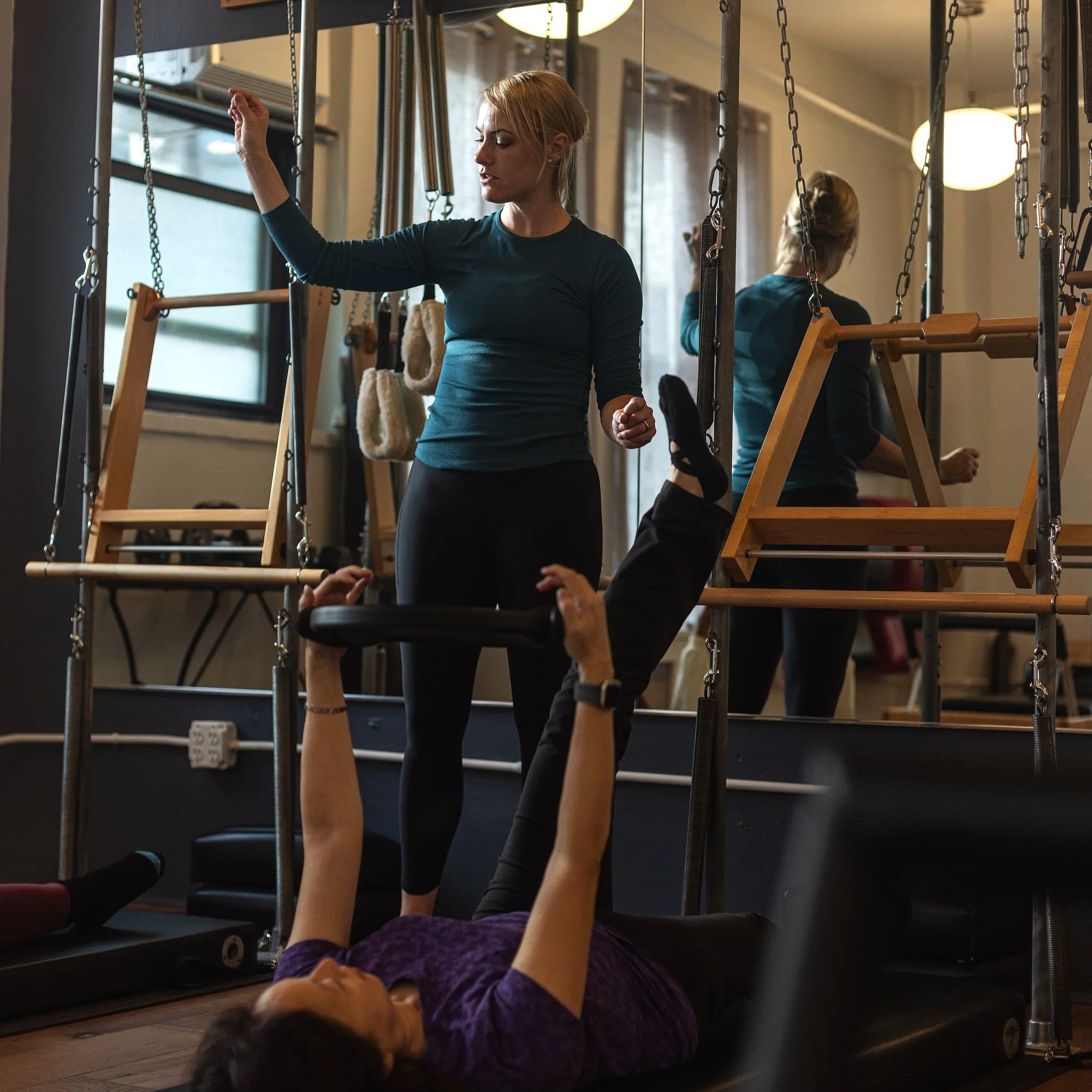
At The Pilates Room NYC, we spend much of our time helping clients build strength and reconnect with their bodies. Along the way, we’ve noticed patterns that tend to surface in how people approach their practice. You may recognize yourself in some of them, and that awareness can open the door to subtle, meaningful shifts. Pilates is more nuanced than it may appear, and the more you understand how it works, the more rewarding each session will become.
Here are ten things the instructors at TPR wish every student knew:
1. Slower is usually more effective
Pilates doesn’t reward speed. This feels contrary to nearly every facet of American life, where we’re taught to value velocity and acceleration as productive qualities. Moving slowly gives you the chance to organize your body, notice imbalances and actually feel the work where it’s intended. When you rush, you skip the very connections the exercise is designed to build. Precision takes time, and that time is where the transformation happens. Think of Pilates as a space not only to build strength and focus on the mind-body connection, but as a place you can take a breather from the breakneck pace of modern life.
2. The goal isn’t to look impressive
It can be tempting to measure success by how an exercise appears—how high your legs lift or how “advanced” something looks. But Pilates is an internal practice. What matters is how well you’re coordinating breath, alignment and muscle engagement. A smaller, more controlled version of an exercise is often far more valuable than a bigger, flashier one.
3. Your breath is part of the exercise
Breathing isn’t a background detail. It’s a tool that supports movement, helps activate deep muscles and keeps you from gripping in the wrong places. Many beginners hold their breath without realizing it, which makes everything feel harder than it needs to be. Learning to move with your breath is one of the biggest shifts you can make early in your Pilates journey.
4. Consistency matters more than intensity
One killer session won’t change your body, but regular practice will. At The Pilates Room, we often see clients make the most progress when they show up steadily, even if each session feels modest. Over time, those small, focused efforts build strength, coordination and confidence in a way that sporadic intensity never quite does. It’s worth noting that when we talk about consistency, we don’t mean over one month. Sometimes it takes several months to a year to really get into the groove of Pilates and start to see improvement in form and strength. Don’t be discouraged if you’re not seeing results within the first few weeks of your practice! Allow yourself plenty of time and a significant runway to start seeing improvements in your strength, alignment and Pilates proficiency.
5. Everyone’s body works differently
No two bodies are built the same, and Pilates respects that. The springs that challenge one person might overwhelm another. The range of motion that feels accessible for someone else might not be right for you today. Your practice is personal, and comparing yourself to the person next to you on the Reformer pulls your attention away from what your body actually needs. Plus, it’s impossible to compare two people’s physical and emotional journeys with pain, healing and movement. So don’t worry about what your neighbor is doing. High five them in the spirit of a shared experience, and then focus on your breath.
6. Modifications are part of the work
There’s a misconception that modifying an exercise means you’re doing a lesser or weaker version. In reality, a well-chosen modification is the most appropriate and effective option. It allows you to build strength safely, especially if you’re working with an injury or simply learning something new. There’s no need to feel singled out if your instructor slides a prop your way during a sequence. In fact, it means that your instructor is paying attention and offering you a way to improve the foundation of your practice.
7. You don’t need to “get it right” immediately
Pilates has its own language—neutral spine, pelvic placement, shoulder stability—and it can feel like a lot at first. That’s normal. Understanding develops over time through repetition and experience. The early sessions are less about mastery and more about familiarization. Progress tends to unfold gradually rather than all at once. Some of our clients are high-achievers, and though we understand the impulse to try and master all the movements in one session, it simply isn’t possible. Plus, building on your practice and deepening your understanding of each sequence is part of the joy (and challenge!) of Pilates. It’s humbling to learn something new as an adult. Keep that in the back of your mind, and let yourself off the hook.
8. Tension often hides where you least expect it
Many students are surprised to discover how much unnecessary effort they carry in their neck, shoulders, jaw or hips. Pilates helps you notice these patterns and release them. Strength in this method isn’t about gripping harder; it’s about using the right muscles at the right time while letting the rest of the body stay responsive.
9. Communication makes your session better
Your instructor isn’t a mind reader. If something feels uncomfortable, unclear or simply off, saying so allows us to adjust the exercise in real time. Whether it’s a previous injury, a tough day or confusion about a cue, that information helps us tailor the session to you. Don’t be afraid to ask questions and to give us your feedback. Pilates works best as a collaboration.
10. The changes are often subtle—but meaningful
Pilates progress doesn’t always show up as dramatic before-and-after moments. Instead, it reveals itself in quieter ways: standing a little taller, moving with less strain, feeling more connected to your body. These shifts can be easy to overlook, but they are often the most lasting and impactful. Tracking progress in areas like posture, balance, flexibility and breath control can offer the best overall picture of how far you’ve come.
Pilates invites you to notice what’s happening beneath the surface. The more you understand these underlying principles, the more your practice becomes something you can rely on.
At The Pilates Room NYC, we believe that Pilates is for every body, and that learning how to work with your body is where the real work begins. Come join us for a session and find out what you’re capable of.