The Best Pilates-Inspired Stretches for Tight Hips, Lower Back and Shoulders
If you’ve ever walked into a Pilates studio feeling stiff through your hips, achy in your lower back or knotted across your shoulders, you’re in good company. These are the areas where many of us carry the effects of long workdays and not enough intentional movement. The good news is that you don’t need anything complicated to start feeling better. A handful of thoughtful, Pilates-inspired stretches can go a long way.
At The Pilates Room, we can recommend a few reliable movements if you find yourself feeling tight. They’re simple, grounded in good mechanics and easy to adapt. What makes them “Pilates-style” isn’t the shape of the stretch—it’s the attention to breath, alignment and control. Instead of forcing your body into a position, you ease into it and stay connected to how it feels.
Here are a few of the most helpful stretches for three common trouble spots: hips, lower back and shoulders.
For Tight Hips: Gentle Opening Without Forcing It
Tight hips often come from spending hours seated, which keeps the hip flexors in a shortened position. Over time, that can lead to discomfort when you stand, walk or try to exercise.
One of the most effective places to start is with a supine figure-four stretch. Lie on your back with your knees bent and feet on the floor. Cross one ankle over the opposite thigh, creating a “figure four” shape. From there, draw the bottom leg toward your chest. Keep your shoulders relaxed and your head heavy. Instead of pulling aggressively, let gravity and your breath guide the stretch. You might notice the outer hip beginning to release after a few slow exhales.
Another favorite is a low lunge hip flexor stretch. Step one foot forward and lower your back knee to the mat. Place your hands on your front thigh and gently shift your weight forward. The goal isn’t to sink as low as possible. Instead, think about lengthening through the front of the back hip. If you tuck your pelvis slightly, you’ll often feel the stretch deepen without needing to move further.
For a more dynamic option, try a pelvic curl with hip opening awareness. Lying on your back, press into your feet and slowly lift your hips off the mat one vertebra at a time. At the top, pause and notice whether your hips feel level. Then lower down with control. This movement doesn’t look like a stretch in the traditional sense, but it helps reset how the hips function, which can ease tightness over time.
For Lower Back Discomfort: Support and Space
The lower back often complains when it’s doing more work than it should. Limited hip mobility, weak abdominal support and habitual tension can all contribute. Stretching can help, but the approach matters.
A classic starting point is knees-to-chest. Lie on your back and draw both knees in, wrapping your arms around your shins. Gently rock side to side if it feels good. This position can create a sense of space through the lower back. Keep your breathing steady and avoid pulling your knees in so tightly that your shoulders tense.
Another helpful movement is the spine twist supine. With your arms out to the sides, bring your knees into tabletop and let them fall to one side. Turn your head in the opposite direction if that’s comfortable. The key here is control. Move slowly and only go as far as you can keep both shoulders grounded. This encourages rotation through the spine without strain.
For something more active, the cat-cow stretch is a staple. Start on your hands and knees. As you inhale, let your belly soften and your chest broaden slightly. As you exhale, round your spine and draw your abdominals in. The movement doesn’t need to be dramatic. What matters is the articulation through the spine and the coordination with your breath.
If your lower back tends to feel tight after standing or walking, a child’s pose variation can be soothing. From a kneeling position, sit your hips back toward your heels and reach your arms forward. If your hips don’t comfortably reach your heels, place a cushion underneath for support. This isn’t about forcing depth—it’s about finding a position where your back can lengthen without effort.
For Tight Shoulders: Releasing Tension from Daily Habits
Shoulder tension is incredibly common, especially if you spend time at a desk or looking down at a phone. The muscles around the neck and upper back can become overworked, while others stay underused.
A simple yet effective stretch is the chest opener with clasped hands. Stand or sit tall and interlace your fingers behind your back. Gently draw your hands away from your body as you broaden across your collarbones. Keep your neck relaxed and avoid pushing your ribs forward. This stretch counters the rounded posture many of us fall into.
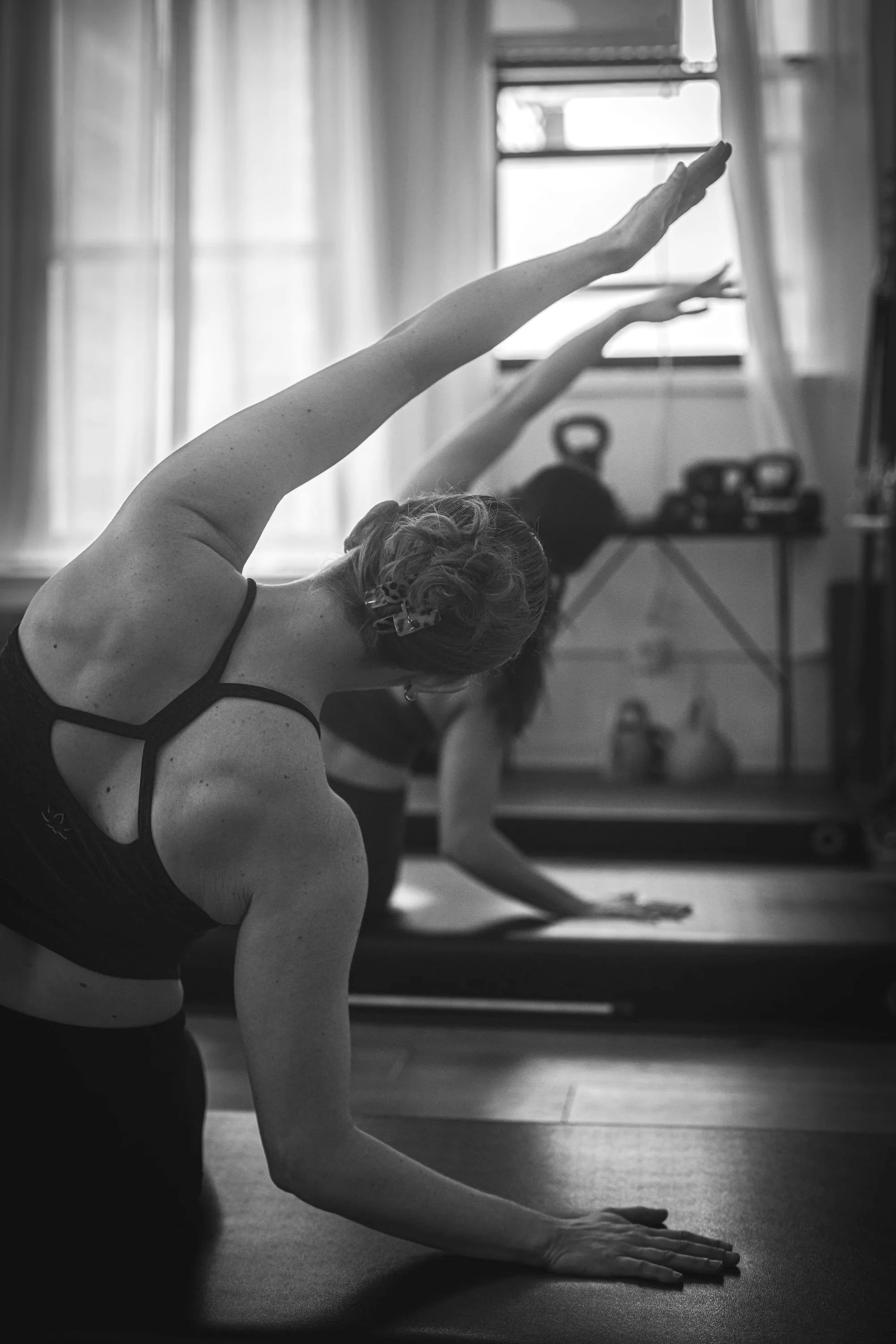
For a more targeted release, try a thread-the-needle stretch. From hands and knees, slide one arm underneath your body, reaching across to the opposite side. Lower your shoulder and the side of your head toward the mat. This creates a gentle twist and can ease tension through the upper back and shoulders. Move slowly in and out of the position, following your breath.
Wall support can also be useful. A wall-assisted shoulder stretch involves placing one hand on the wall at shoulder height and gently turning your body away. You’ll feel a stretch across the front of the shoulder and chest. Adjust the height of your hand to explore different angles, and keep the movement small.
One Pilates-inspired approach that often gets overlooked is arm circles with control. Standing or seated, extend your arms out to the sides and make small, slow circles. Focus on keeping your shoulders down and your neck free. This helps improve how the shoulder joint moves, which can reduce the feeling of tightness.
Bringing It All Together
Stretching doesn’t need to take a long time to be effective. A few minutes spent paying attention to how your body feels can shift things more than a rushed routine. When you approach these movements with care, they can help create balance in the body.
In Pilates, we often think in terms of support and ease. If a stretch feels forced or uncomfortable, it’s worth adjusting. You might need a smaller range of motion, a prop or simply a slower pace. Over time, consistency tends to matter more than intensity.
If you’re not sure where to begin, pick one stretch for each area and try them a few times a week. Notice what changes. Maybe your hips feel less restricted when you walk, or your shoulders settle more easily during the day. These small shifts add up.
Pilates invites you to notice what’s happening beneath the surface. The more you understand these underlying principles, the more your practice becomes something you can rely on.
At The Pilates Room NYC, we believe that Pilates is for every body, and that learning how to work with your body is where the real work begins. Come join us for a session and find out what you’re capable of.