
The Utility of the Spine Corrector
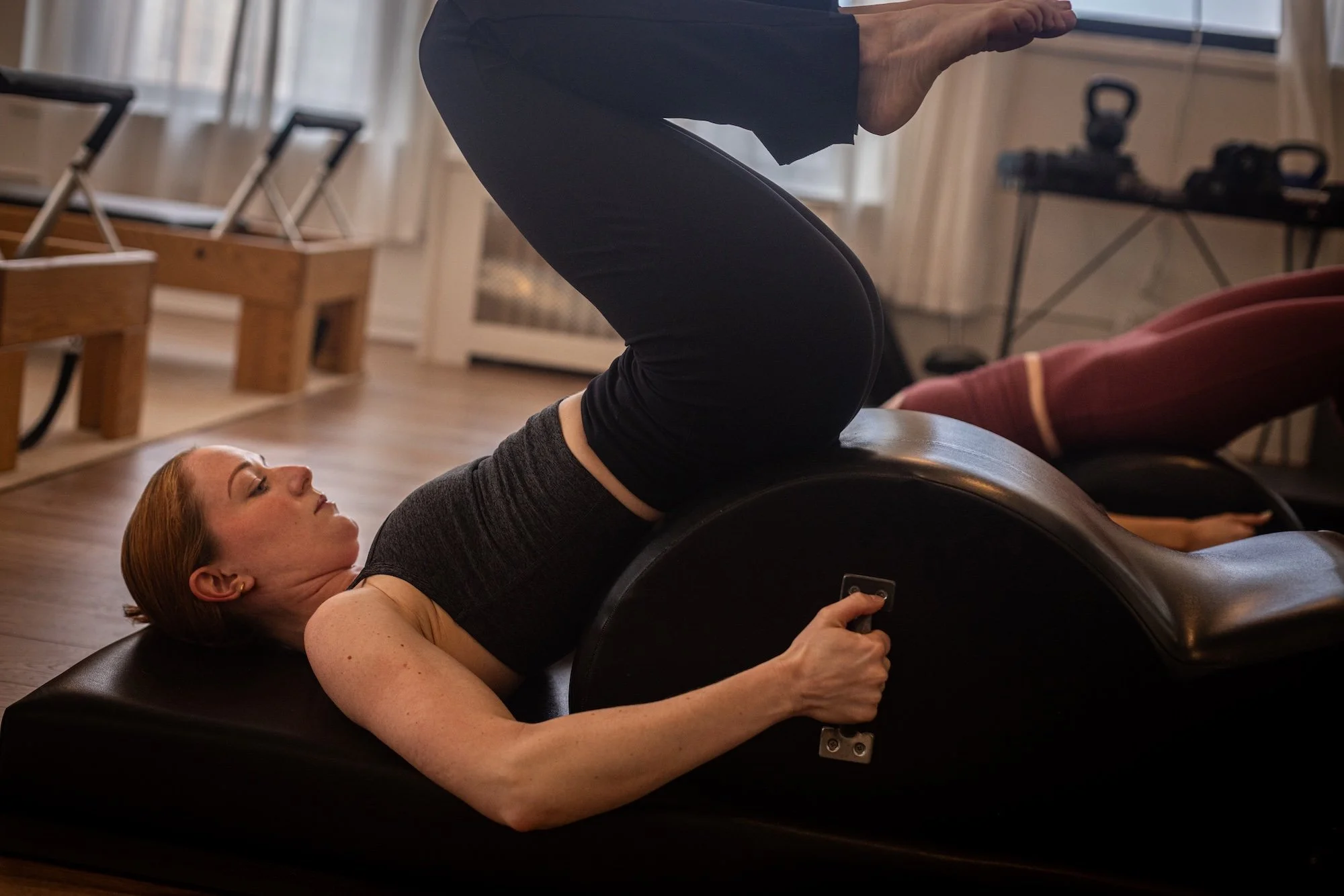
Repetitive physical habits and long hours spent sitting or standing with poor posture can change the shape of the body over time. The chest tightens. The lower back compresses. The neck begins to push forward. Joseph Pilates believed that movement could restore healthier alignment through controlled exercise and focused breathing. The Spine Corrector became an important part of that process. Its curved surface allows the body to move through positions that can be difficult to access on a flat mat.
One of the main purposes of the Spine Corrector is to improve spinal mobility. The spine is designed to move in many directions, though daily habits often reduce that capacity. Some people become stiff through the upper back. Others grip through the lower spine while avoiding movement through the ribs and thoracic area. Exercises on the Spine Corrector encourage extension, flexion and side bending in a way that feels supported rather than forced. Because the body is positioned over a curved surface, movement can unfold with greater range and less tension.
Extension exercises are especially valuable on the Spine Corrector. Many people spend their days leaning forward toward phones, laptops or steering wheels. Over time, the front of the body shortens while the back becomes overworked. When a client reclines over the barrel and opens through the chest, there is often an immediate sense of space across the collarbones and ribs. Breathing changes. The shoulders settle. The neck releases unnecessary effort. These moments can feel subtle, though they can have a lasting effect on posture and comfort.
The Spine Corrector also strengthens the body in a unique way. Because the surface is unstable compared to the floor, the deep muscles of the abdomen and back must organize and engage carefully during movement. Exercises that appear simple can become surprisingly demanding when performed on the curve of the barrel. The body must respond continuously to maintain control and alignment. This kind of work develops awareness alongside strength, which is one reason this apparatus is so highly valued.
Another important aspect of the Spine Corrector is the feedback it provides. Pilates equipment often teaches through sensation rather than instruction alone. A person can feel when the ribs are flaring or when the pelvis shifts out of alignment. The shape of the barrel highlights habits that may go unnoticed during everyday movement. For clients recovering from injury or learning to reconnect with their posture, this feedback can be extremely helpful. The equipment offers support without removing responsibility from the body itself.
The Spine Corrector can be used for clients at different stages of their movement practice. Beginners may use it to experience supported stretching and gentle abdominal work. Advanced practitioners can perform highly challenging exercises that require precision and control. Athletes often appreciate how the barrel opens areas that become restricted through repetitive training. Dancers frequently use it to develop articulation through the spine while maintaining strength through the center of the body. Older adults may find comfort in the way the equipment supports movement without excessive strain on the joints.
Breathing plays a major role in the work performed on the Spine Corrector. Joseph Pilates emphasized breath as a way to energize the body and support efficient movement. The curved shape of the barrel encourages expansion through the rib cage, especially during exercises that open the chest and side body. Many clients notice they can breathe more fully while lying across the arc. That increased awareness of breath often carries into movement outside the studio as well.
There is also an emotional quality to the Spine Corrector that many people do not expect. Modern life encourages the body to brace itself constantly. The shoulders rise. The jaw tightens. The chest collapses inward. Spending time supported over the barrel can create a sense of release that feels deeply calming. Clients often step away from a Spine Corrector session standing taller and moving more freely. The change is not dramatic in a theatrical sense. It is quieter than that. The body simply feels more connected.
At our studio, we love introducing clients to the Spine Corrector because it can change the way they think about movement. Clients may arrive believing exercise should involve speed or intensity to be effective. The Spine Corrector teaches something different—the exercises encourage the body to move with clarity rather than force. That approach aligns closely with the heart of Pilates, where quality of movement matters more than quantity.
For such a modest piece of equipment, its impact can be profound. The Spine Corrector helps people rediscover movement that feels natural and balanced. It creates space where the body has become restricted. It strengthens areas that need support while encouraging release where tension has taken hold. In a Pilates studio filled with springs, straps and moving carriages, the Spine Corrector remains one of the clearest examples of how thoughtful design can guide the body back toward healthier movement.
Pilates invites you to notice what’s happening beneath the surface. The more you understand these underlying principles, the more your practice becomes something you can rely on.
At The Pilates Room NYC, we believe that Pilates is for every body, and that learning how to work with your body is where the real work begins. Come join us for a session and find out what you’re capable of.