
The Mind-Body Connection: What Pilates Clients Learn After Their First 10 Sessions.
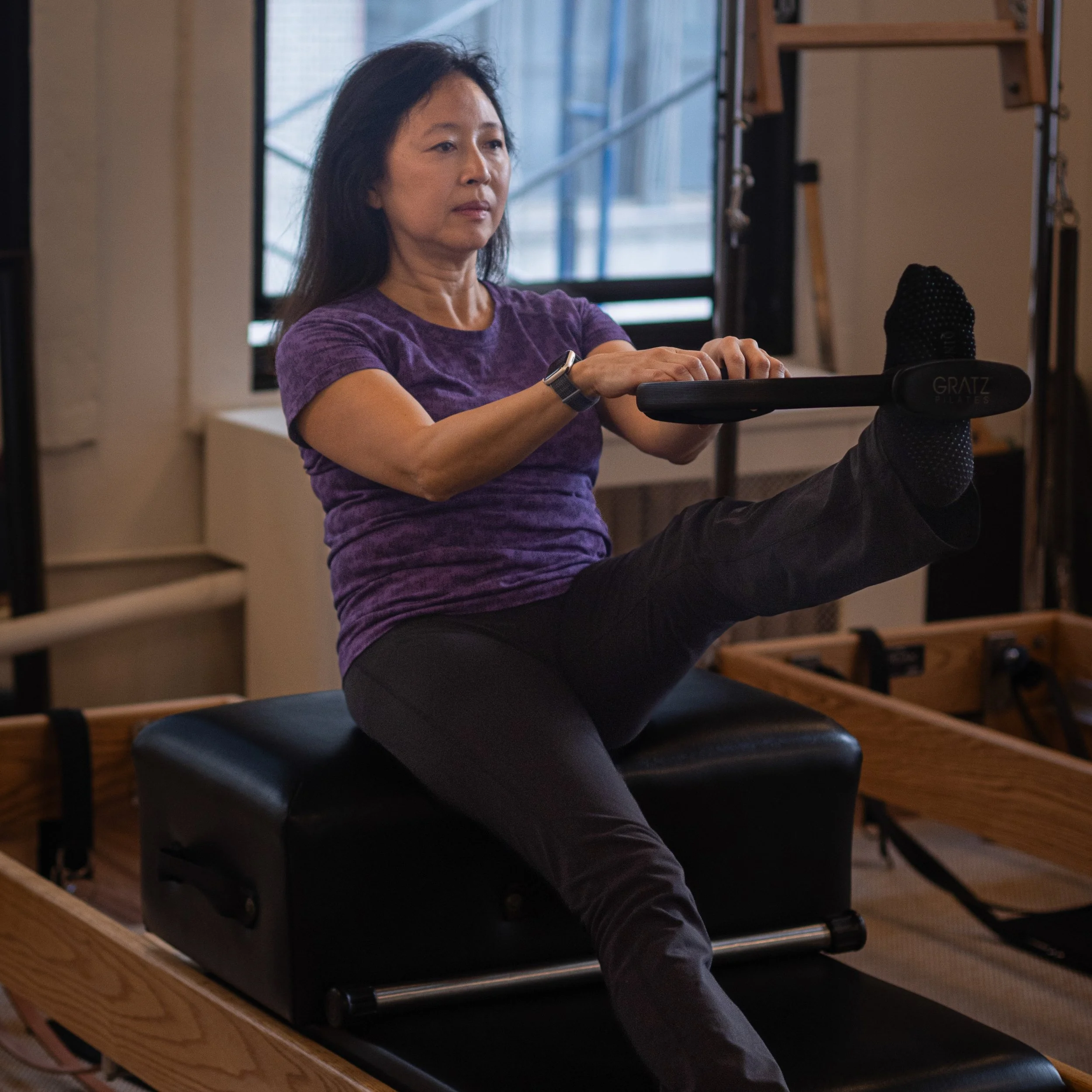
Some New Yorkers walk into their first Pilates session expecting to “work out” in the conventional sense: stretch a little, sweat a little, maybe feel sore the next day. What often surprises them is that Pilates, especially when practiced consistently, becomes less about chasing a physical outcome and more about building a relationship between the mind and the body. For beginners, the first ten sessions are a powerful threshold. They’re long enough to notice real change, yet early enough that progress feels exciting and motivating rather than overwhelming. At The Pilates Room NYC, we believe that in the first ten sessions clients stop guessing what their body is doing and start actually listening to it.
During their very first Pilates sessions, most clients are learning a new language. Words like neutral spine, pelvic stability, breath and control can feel abstract at first. The body may feel uncoordinated or unfamiliar, even to people who consider themselves fit. This is completely normal. Pilates asks for attention, not just effort, and that shift can be humbling. By session three or four, however, something subtle begins to happen. Clients start recognizing patterns. They notice which side feels stronger, which shoulder wants to grip, or how often they hold their breath without realizing it. This awareness is the earliest marker of the mind-body connection, and it’s measurable in a way that goes beyond numbers on a chart.
By the fifth session, many beginners report that exercises which once felt abstract now feel intentional. Movements slow down. Transitions become smoother. There’s less rushing and more curiosity. This is often when clients begin to understand that Pilates isn’t about doing more repetitions, but about doing fewer with greater precision. They begin to feel muscles engaging before they move, rather than reacting afterward. That anticipatory control is a hallmark of neuromuscular learning, and it’s one of the most encouraging signs that progress is happening, even if the exercises still look simple from the outside.
Breath awareness is another clear milestone that tends to emerge within the first ten sessions. Early on, breathing can feel like an extra task layered onto movement. Clients may forget when to inhale or exhale or feel frustrated trying to coordinate it all. Around sessions six or seven, breathing often becomes more natural and supportive. Clients start using their breath to initiate movement, stabilize their core and release unnecessary tension. This change doesn’t just improve performance in the studio; it carries over into daily life. People notice they’re breathing more fully during downtime at their desks or at stressful moments during the day.
Posture is another area where progress becomes noticeable and motivating within the first ten sessions. We’re careful not to frame posture as something that needs to be “fixed” or forced. Instead, Pilates teaches clients how posture feels when the body is balanced and supported. Around session eight or nine, many clients mention that they’re sitting differently at work or standing more comfortably while waiting in line for coffee. This isn’t because they’re trying harder; it’s because their body now recognizes a more efficient alignment. The mind has learned to sense when something is off, and the body responds almost automatically.
Strength gains during the first ten sessions are often quieter but deeply impactful. Rather than dramatic changes, clients notice increased stability and confidence. Movements that once caused shaking now feel steadier. Getting up from the floor feels easier. Hoisting a heavy backpack into position feels less taxing. These functional improvements are incredibly encouraging for beginners because they’re directly tied to everyday life. At this point, progress becomes personal and practical, not abstract or aesthetic.
Perhaps the most profound shift that occurs within the first ten sessions is a change in mindset. Many clients arrive with a goal-oriented mentality, focused on outcomes like flexibility or strength. By the tenth session, those goals are still there, but they’re accompanied by something deeper: trust. Clients begin to trust their bodies, trust the process and trust themselves to show up consistently. They learn that progress isn’t linear and that some days feel stronger than others, and that’s okay. This mental shift is a crucial part of the mind-body connection, and it’s one of the reasons Pilates becomes a sustainable practice rather than a short-term fix.
From a teaching perspective, the first ten sessions also give us valuable insight into how a client learns and moves. We can measure progress not just by what exercises they can do, but by how they approach them. Are they more patient? More focused? More aware of their own habits? These qualitative changes are just as important as physical ones, and they help us tailor sessions that continue to challenge and support each client.
For beginners, framing progress around the first ten sessions can be incredibly motivating. It creates a clear, achievable timeline and shifts the focus away from perfection. Instead of asking, “Am I good at this?” clients start asking, “What am I noticing now that I didn’t notice before?” That question alone signals growth. It reinforces the idea that Pilates is a practice, not a performance, and that every session builds on the last in ways that may not always be obvious but are always meaningful.
Carving out time to slow down and connect with your body is a powerful act. After ten sessions, most clients realize that Pilates isn’t just something they do; it’s something they carry with them. The mind-body connection they’ve begun to build shows up in how they move, breathe and navigate their day. It becomes a quiet source of strength and awareness, supporting them long after they leave the studio.